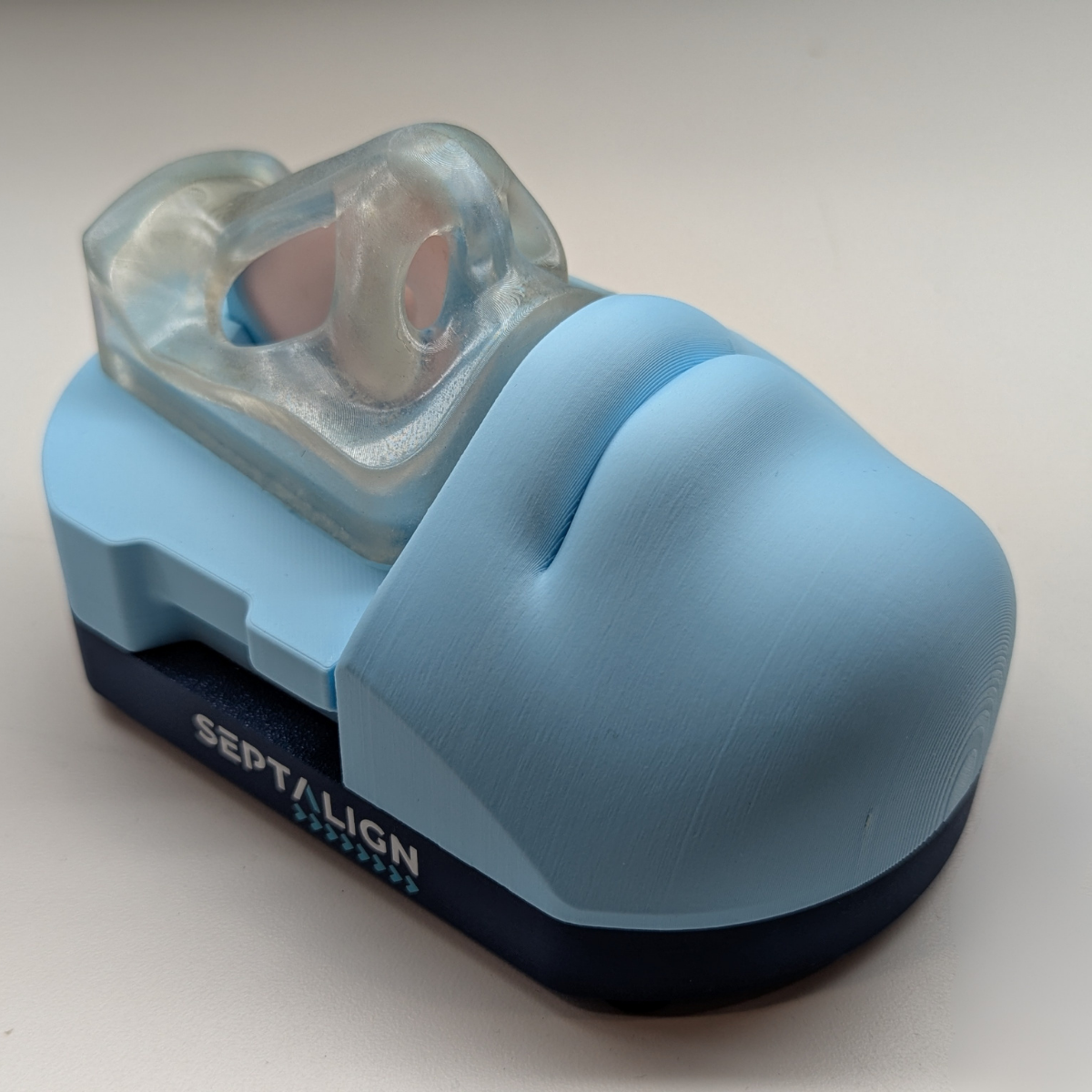
Spirair, a California-based MedTech startup, developed SeptAlign — the first minimally invasive, bioresorbable implant for correcting a deviated septum. For physicians, successful adoption depends on more than clinical performance — it requires realistic, repeatable training.
To meet that challenge, Swope Design Solutions (SDS) engineered a modular simulator that allows surgeons to practice implant placement safely and precisely, with tactile feedback that mimics living tissue. The result bridges the gap between clinical innovation and human experience — turning surgical validation into something you can touch, test, and refine.
Section 1 – Simulator Architecture
At the heart of the project lies a modular simulator designed to mimic a clinical procedure.• 3D-printed base provides stable support at a cost suitable for low-volume production.
- 3D-printed base provides stable support at a cost suitable for low-volume production
- Replaceable cartridge (coupon) holds the septum and surrounding tissue, engineered for 15–20 sessions per unit
- Transparent observation window lets every instrument movement be observed and studied
- Silicone nasal overlay (~Shore 10A) recreates the softness and response of real tissue
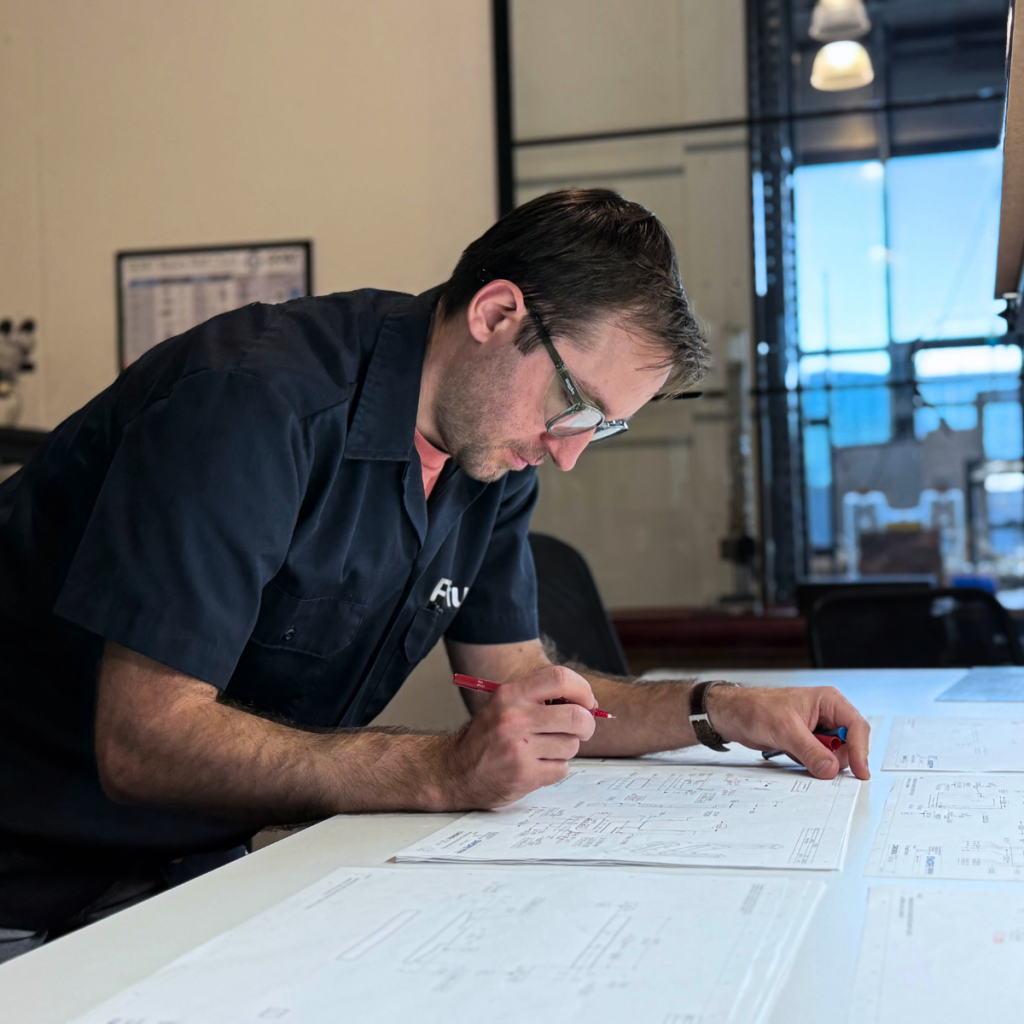
Senior Mechanical Engineer Jason Pfund defined the system architecture and guided the team to ensure each design decision met both clinical precision and scalable manufacturing goals.
Section 2 – From CAD to Prototype
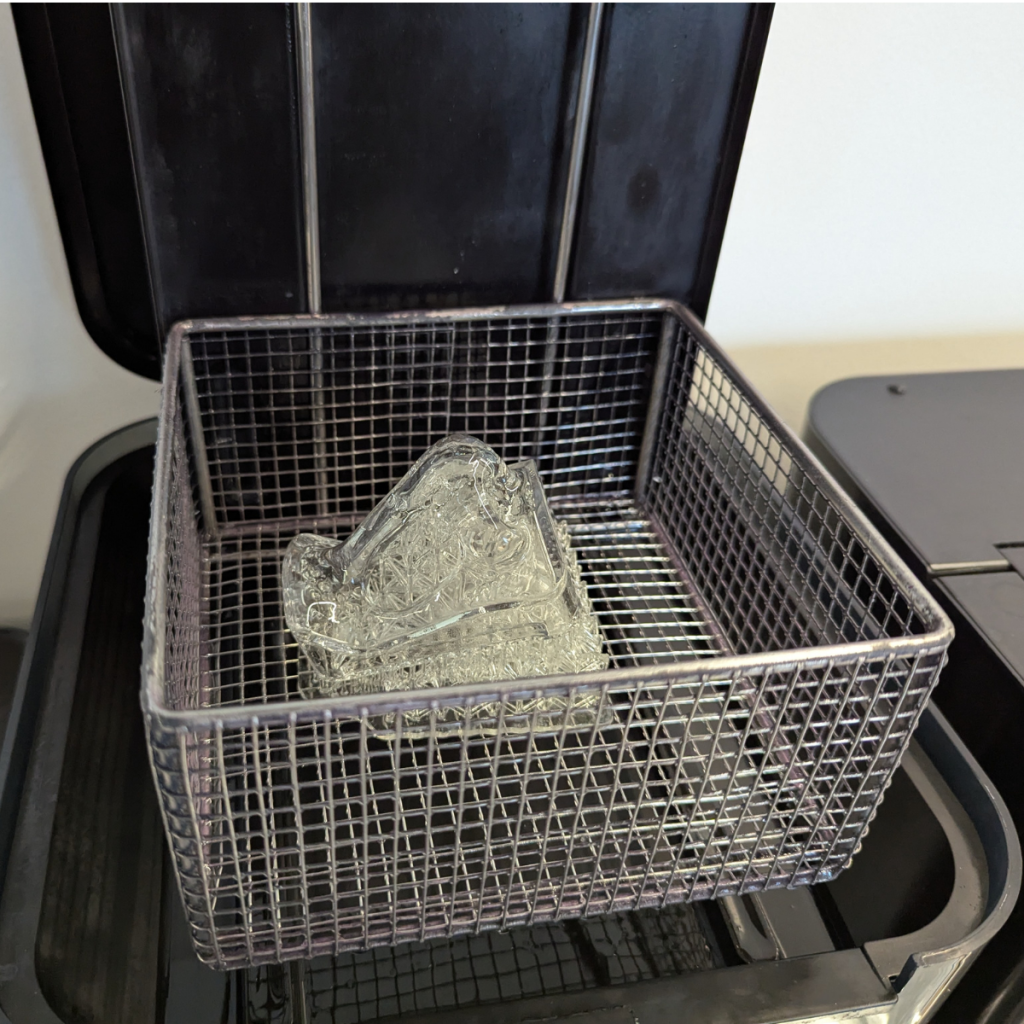
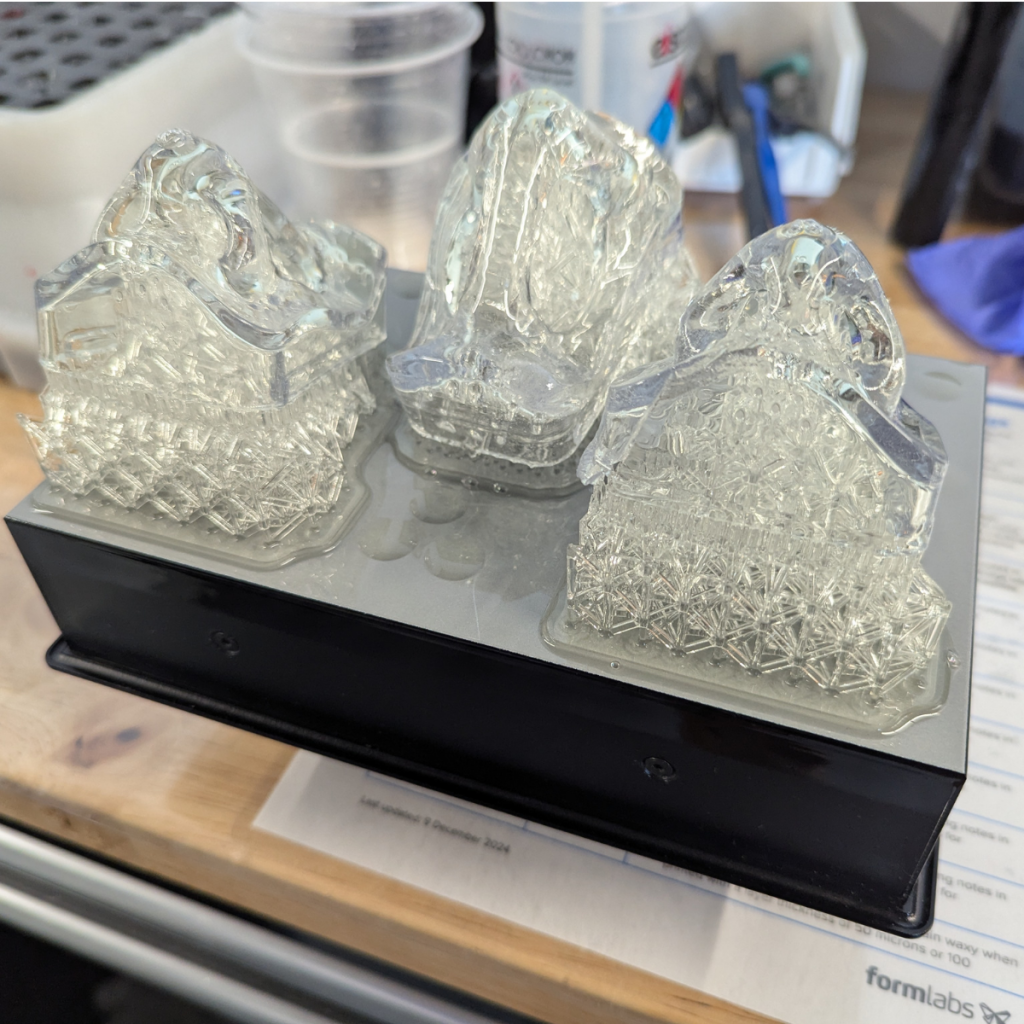
This is where ideas became tangible. Mechanical Engineer Armand Matossian translated CAD models into physical prototypes on an SLA printer (Formlabs Form 4).
He experimented with silicone blends (Shore 20A, 30A, 40A) and nylon mesh reinforcements (30×30 and 58×58 weave) to achieve optimal flexibility and durability.
Each prototype became its own test:
- Could the septum endure dozens of training cycles?
- What happens when the mesh shifts by a fraction of a millimeter?
- How realistic is the feedback through the instrument?
The winning silicone-mesh combination preserved form and tactile feel even after 20+ sessions. Armand also tracked print time, post-processing effort, and unit cost, pushing the project from bench experiment to reproducible workflow.
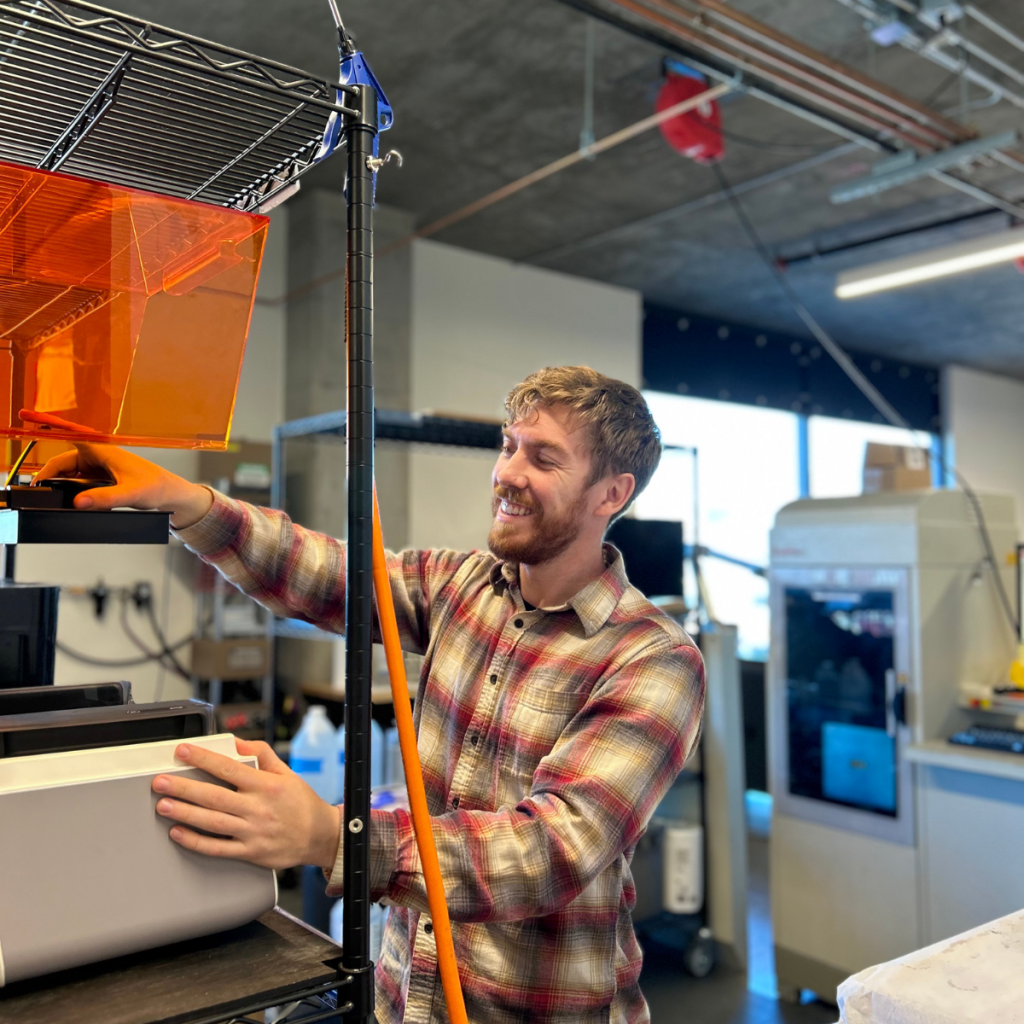
Section 3 – Manufacturing Challenge
To move from prototypes to consistent production, Mechanical Engineer Claire Little designed precision aluminum molds and refined the silicone-molding workflow.
Her process followed strict parameters to ensure identical results across every batch:
- Mixed Part A & Part B through a pneumatic dispensing nozzle
- Cured at 150 °C and 80 psi for 8 minutes
This disciplined method ensured that every molded component maintained consistent quality and geometry — transforming experimental success into a stable, small-batch manufacturing process.
Section 4 – Final Assembly
As the final stage of the project, the team brought together all components to complete the SeptAlign training model.
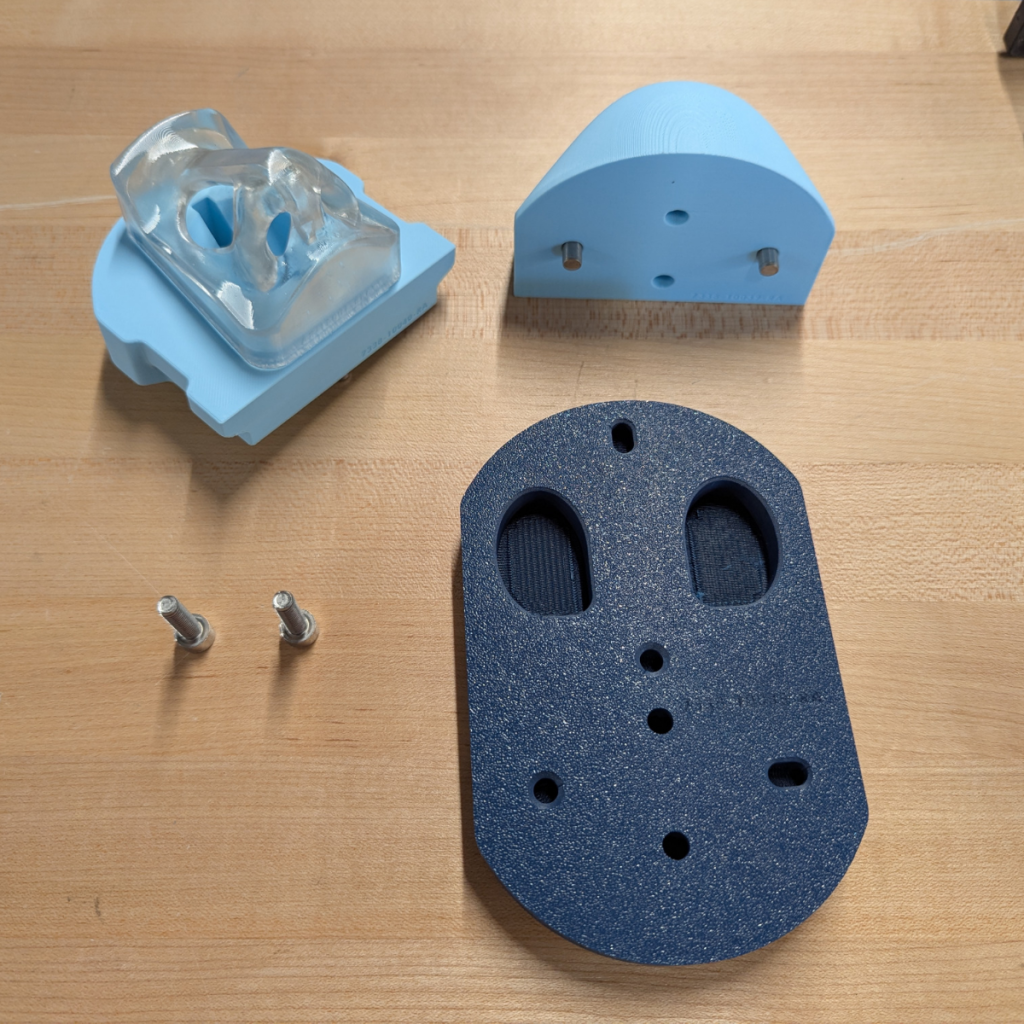
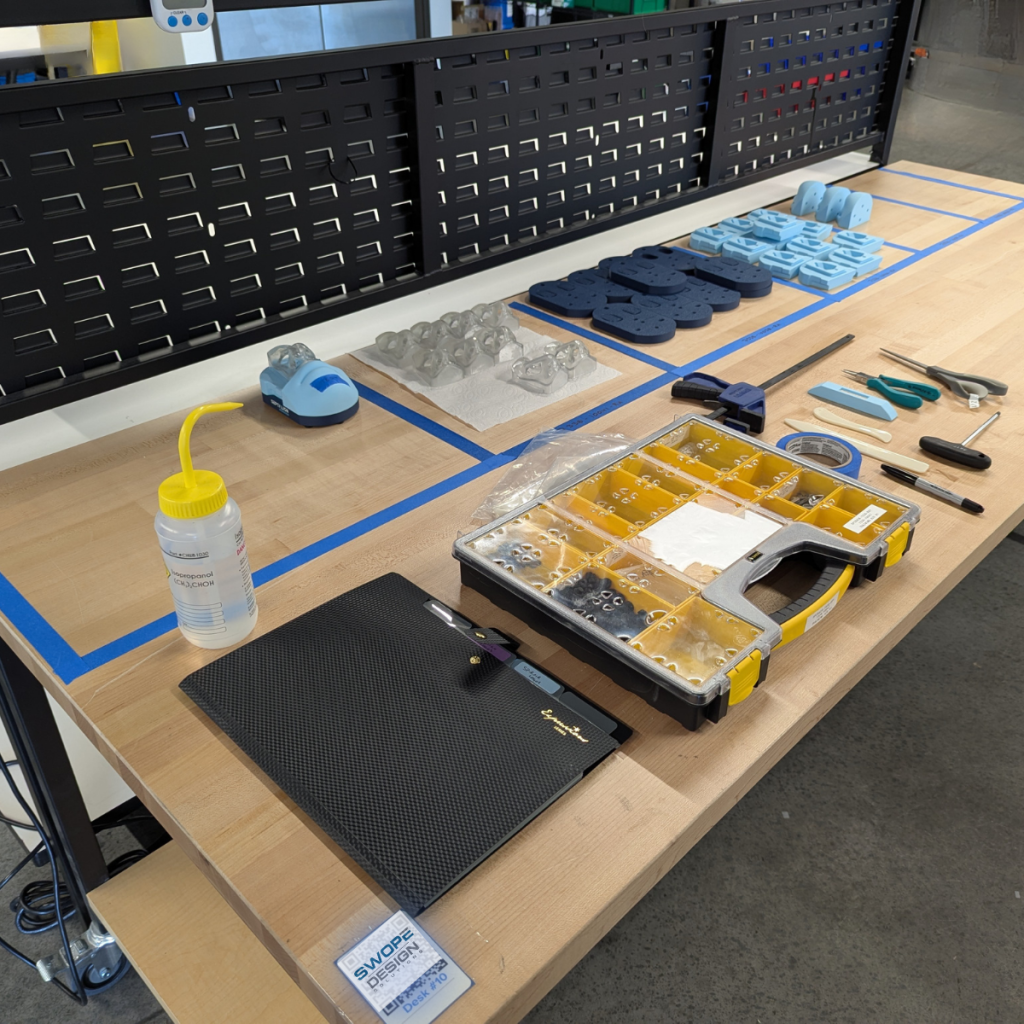
The molded silicone parts, aluminum tooling, and assembled units illustrate the transition from concept validation to a fully realized training device.
Images (shown below):
Mold halves and tooling → Silicone molding setup → Fully assembled SeptAlign training units ready for physician training.
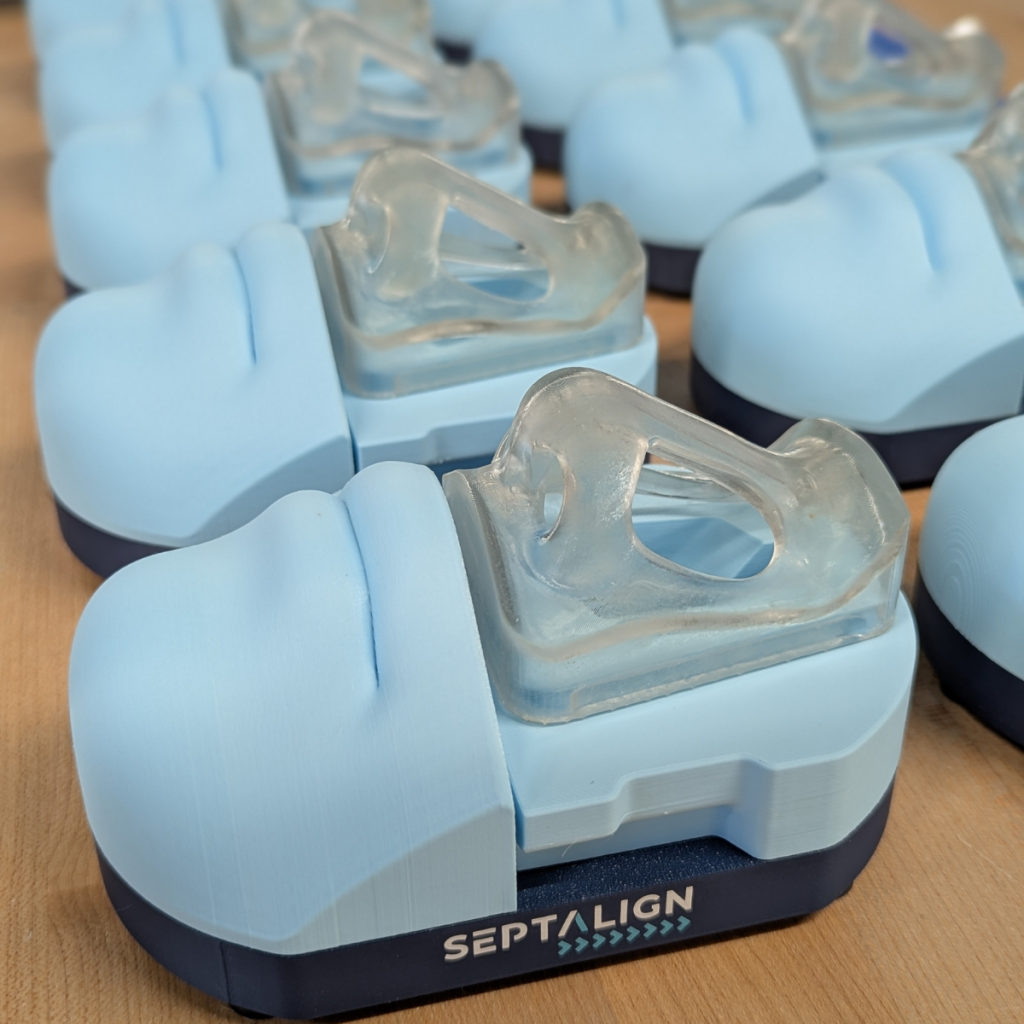
Each stage represents the precision, repeatability, and tactile realism achieved through the Spirair collaboration.
Section 5 – Result
The outcome was the Spirair Training Model — a simulator that exceeds expectations in both realism and reliability.
It allows physicians to practice implant placement as if working with real anatomy, enabling faster skill development and safer clinical adoption.
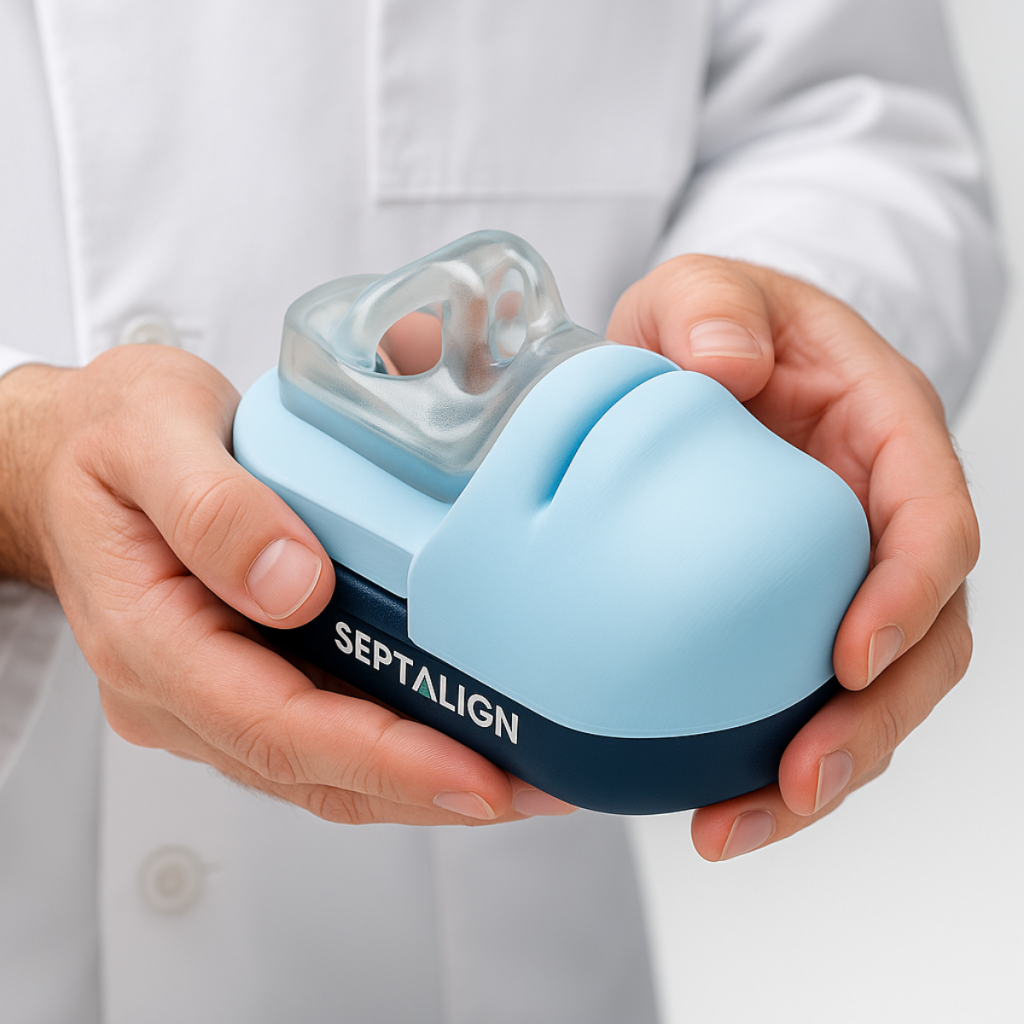
Today, the model is used in universities, training centers, and live demonstrations, helping Spirair’s team teach complex procedures through authentic tactile feedback.
“Thanks to Swope Design Solutions, Spirair’s sales team can now train physicians more effectively with real-world models that bring the patient experience to life.”
— Ben Bishop, CEO of Spirair
Key takeaways
• Developed modular simulator supporting 15–20 repeat uses per cartridge
• Validated lifelike tactile feedback across silicone and mesh variations
• Created stable molding process for reproducible small-batch production